The H.M. Harper Company
The Beginning of The H.M. Harper Company
H. Mitchell Harper (aka Mike Harper), H.M. Harper Jr’s dad, formed what would become the H. M. Harper Company at the age 22 in 1923 with an initial investment of $5,000 from a small inheritance and some borrowed money. The $5,000 was used to buy 5,000 shares of stock. The registration of the stock purchase listed Mike Harper who lived at 104 Keeney in Evanston as the President and his brother Grant who lived at 241 Essex in Winnetka as the Secretary. Mike married Margaret Little in 1923 and she helped guide him in his work. His first business was Harper Manufacturing Service which was intended serve as a middleman as a metal broker. That business was first located in a shared office space in Evanston and then moved to a shared office in the First National Bank building in Chicago. In late 1924, Mike relocated the business to a second floor of a small factory just west of the Dempster Street Station in Evanston, Illinois so it could start manufacturing and eventually become the H.M. Harper Company. Mike bought some old used lathes and semi-automatic screw machines. The average order size was around $6. The company would become known as the “Tiffany” of the nut and bolt business. It should be noted that the company’s infinity symbol was initially trademarked in 1944. It looked like the number eight on its side. The more streamlined infinity symbol in the Harper logo was trademarked years later. The term “Everlasting Fastening” was also registered so the company could use it in marketing the quality of its products.
The company built its first real plant in 1928 with 5,500 square feet at 2620 Fletcher Street in Chicago not far from Riverview Amusement Park. The company’s growth was so strong and rapid that the plant had twelve additions.
The Growth of the H.M. Harper Company
The company continued to prosper even in the Depression years of 1929-1936. Many Eastern European immigrants joined the company during this era. They had great skills and work habits. During the Depression years, cash flow was tight. He told the staff he would keep everyone employed but with a reduction in pay. The Company got a lot of business as World War II emerged from the US Navy for the submarine program. The Company was presented an award for Excellence with four stars by the Army/Navy. Many Navy “Brass” and dignitaries attended the ceremony.
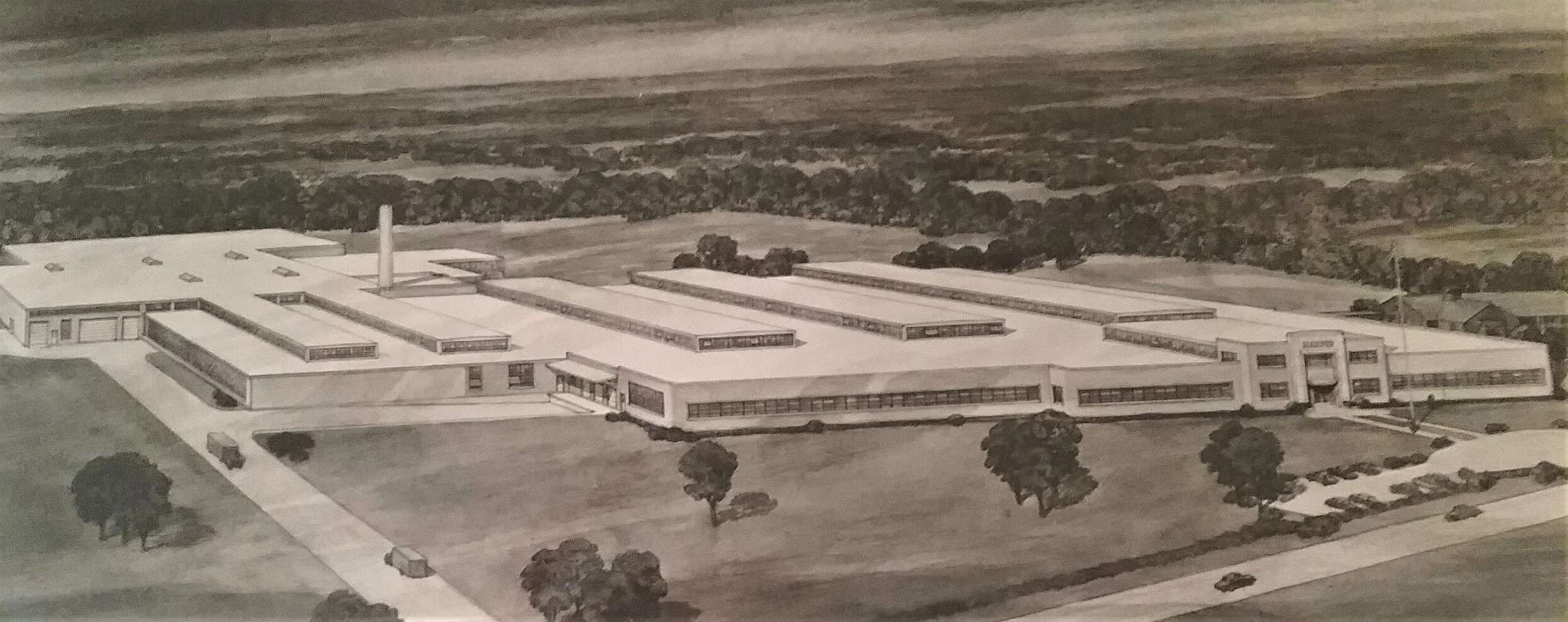
This is the architect’’s Drawing of the plant on the left and headquarters with offices on the right
In 1947, the Company had outgrown the plant that had expanded to 55,000 square feet. It had experienced at least twelve additions. The rapid growth prompted Mike to purchase a 47 acre plant site in Morton Grove, Illinois. Construction began for a new plant comprising 141,000 square feet that was completed in 1948. The total cost for the site and construction was estimated to be one million dollars.
The plant was enlarged in 1950 and again in 1952 to bring the square footage to 171,000 square feet for the plant. The Morton Grove site also had 21,000 square feet created for air conditioned and sound proofed offices. It should be noted that when people said they were going to “the” plant” they were usually referring to all the buildings - the production areas, warehouses, distribution space, offices and lab, The biggest building was “the mill.” It was where all the heavy manufacturing took place.. It looked like and smelled like a steel “mill” because it really was one. It was where raw material metals would be melted and thus transformed into what eventually would become fasteners and extruded items. The mill seemed endless. It was full of fifty gallon drums containing raw metals and what seemed like miles and miles of metal rods formed by sending the metal from the furnaces threw forming machines. The Mills had overhead cranes that went the length of the mill. It also had an above ground acid tank. .
In 1961 the Securities and Exchange Commission indicated H.M. Harper Company announced it was issuing 180,000 shares of common stock, of which, 150,000 were to offered for public sale. The filing with the SEC noted the funds, in part, would be used to reimburse the company for equipment purchased and other capital expenditures. It was used to purchase Anti-Corrosive Metal Products Inc. for $ 1,189,000. It was also used for the planned expansion of the company’s Metals Division at an estimated cost of $ 2,500,000. Some of the funds were also planned for other types of expansion. In 1961, after a stock split, the company had 1,110,000 shares of common stock. AT that time, which Mike’s wife Margaret who owned 199,818 shares planned to sell 30,000 shares. The SEC filing also indicated Mike owned fifteen percent of the outstanding shares and that his oldest son Mitch owned 9 percent of the outstanding shares.
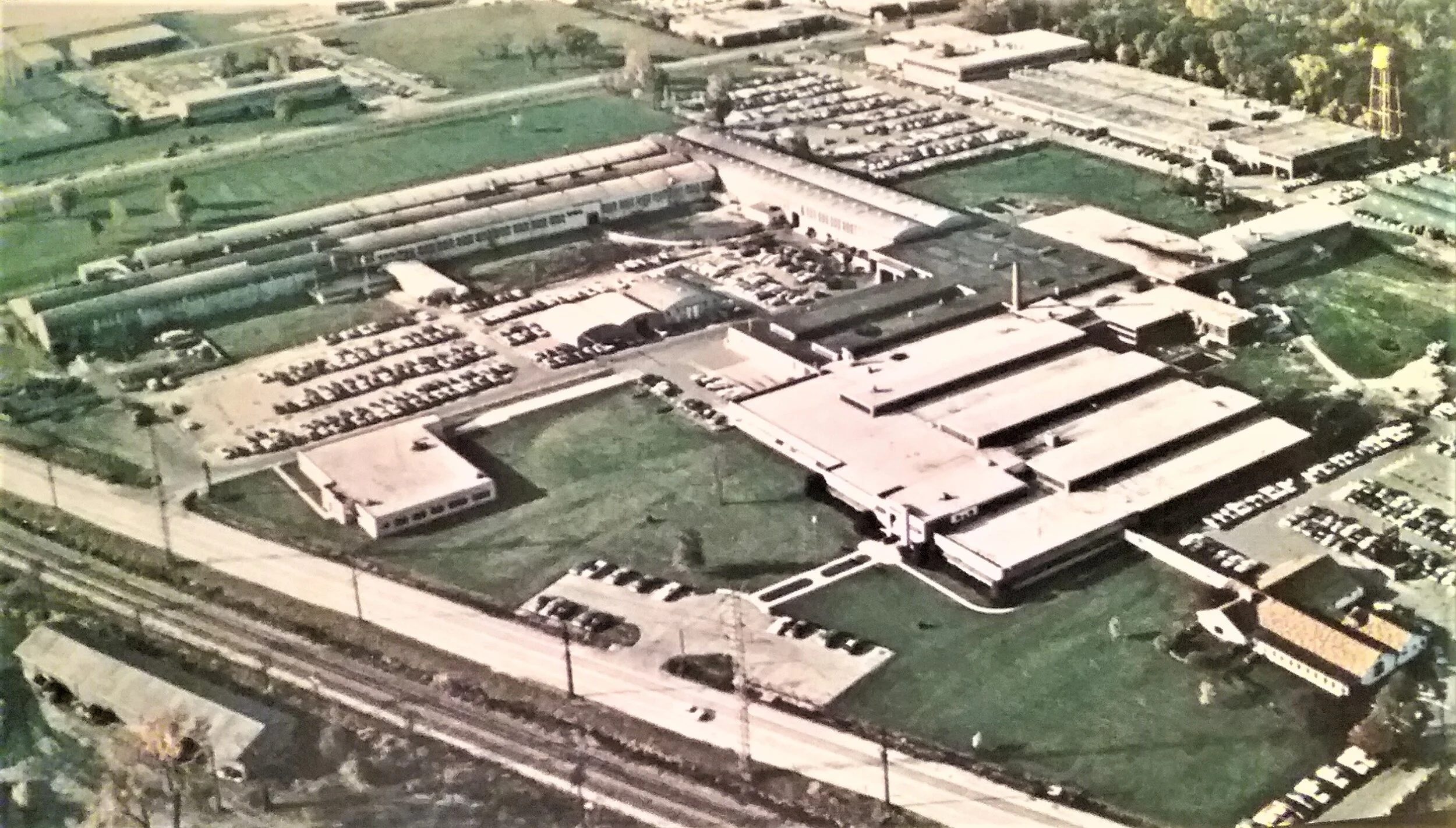
The large “mill” in the upper left. The Electronics subsidiary is the building on the other side of the mill’s parking lot. The “get together” building is on the far right.’
A major expansion of the company’s production and distribution facilities took place in 1964. It added a new building for storing and handling its melting components. It also started construction of an addition for its extruded products and 30,000 square foot addition to house a new complete 1200 ton high-speed hydro press and related equipment. The construction projects added 50% capacity. The company’s experimentation and development of products made from titanium also added to the company’s distinction and competitiveness. At that time, only a few companies were able to extrude titanium successfully.
The H.M. Harper Company was known for its commitment to its employees. As an example, it built a separate building on the property’s north ten acres. with a small country club design for the employees rest and recreation. This area of the company’s property became the site for athletic fields for the employees. That area was very important each year with the passage of time because it would be the site for the company’s annual family day. The annual all-employee picnic included races, great food and a lot of beer. One of the major events was a donkey softball game between the managers and the workers. The softball game was one of the ways management wanted to reduce any perceived differences between management and the work force. Management’s commitment to the employees contributed to the H.M. Harper Company not having a union. The company’s annual summertime picnic was a truly gala event in the 1960s when the company’s 1,000 or so employees could bring their families.
Expansion of product offerings and Business Ventures
The company prided itself as the manufacturer of “Harper Everlasting Fastenings”, which included bolts, nuts, washers, screws, rivets and. accessories made from non-ferrous and stainless steel alloys. The addition in its product offering to also making non-us brass and bronze parts with high quality and fast delivery. This small move into non-ferrous materials was the start of the business that really grew over the years. There were two divisions: initially. There was the Fastener Division producing the major portion of the fastener line and later, the Metals Division producing extruded alloy bar, wire and shapes.
The company’s growth included various initiatives. For example, it acquired Anti-Corrosive Metal Products Company in 1961. This resulted in a major broadening of H.M. Harper Company’s product line because in addition to making standard fasteners, that company also made fasteners of Teflon, nylon, and a variety of plastics with electronics applications. Anti-Corrosive Metal Products Company then started manufacturing some of the H.M. Harper Company’s fasteners. That acquisition added considerable profits the the Harper Company.
The H.M. Harper Company created the Communication Systems Corporation in 1962. It was located in its own building on the property. The subsidiary designed and built systems for for transmitting messages, codes and controls which had military and non-military contracts. By 1964 sales were substantial and it was making a profit.
In 1963, the H.M. Harper Company established Ugine-Harper as a foreign affiliate in Paris. It was a jointly owned by the H.M. Harper Company and Societe d’Electro-Chimie d’Electro-Metalallurgie & des Acieres Electriques d’Ugine. It was formed initially to engage in the distribution of Harper type non-corrosive industrial fasteners in the Common Market in 1964.
The H.M. Harper Company’s interest in the military aerospace business had a setback in the early 1960s. One of its growth areas it was looking forward to involved the development of the U.S. Air Forces’ supersonic bomber the XB-70 Valkyrie. Boeing built two XB-70s at a cost of $750 million each for test trails (the “X” stood for experimental)to see if the Air Force would elevate its aircraft competitiveness Unfortunately, the Air Force’s funding for the program was cancelled with the development of high altitude anti-aircraft missiles by the Soviet Union. Even though the XB-70 was developed to go mach 3 and fly at 70,000 feet, it was deemed to be too vulnerable to the Russian’s rockets. On another unfortunate note, a chase planes collided with one of them on a test flight in California in 1966. The pilot of the F-104 chase plane and one of the co-pilots of the XB-70 died in the resulting crashes. The XB-70 was a very impressive aircraft. It had six tremendous jet engines and looked similar to the Concorde in its stiletto-like design. Yet, the Harper Company’s involvement with and revenue from the military’s various branches continued to enhance the company’s reputation, revenue and profits. The company’s Aerospace Division which was doing business nationally was headquartered in Los Angeles. It should be noted that Mike set up a sales office in Los Angeles decades earlier.
Mike’s passing sent shock waves through the company
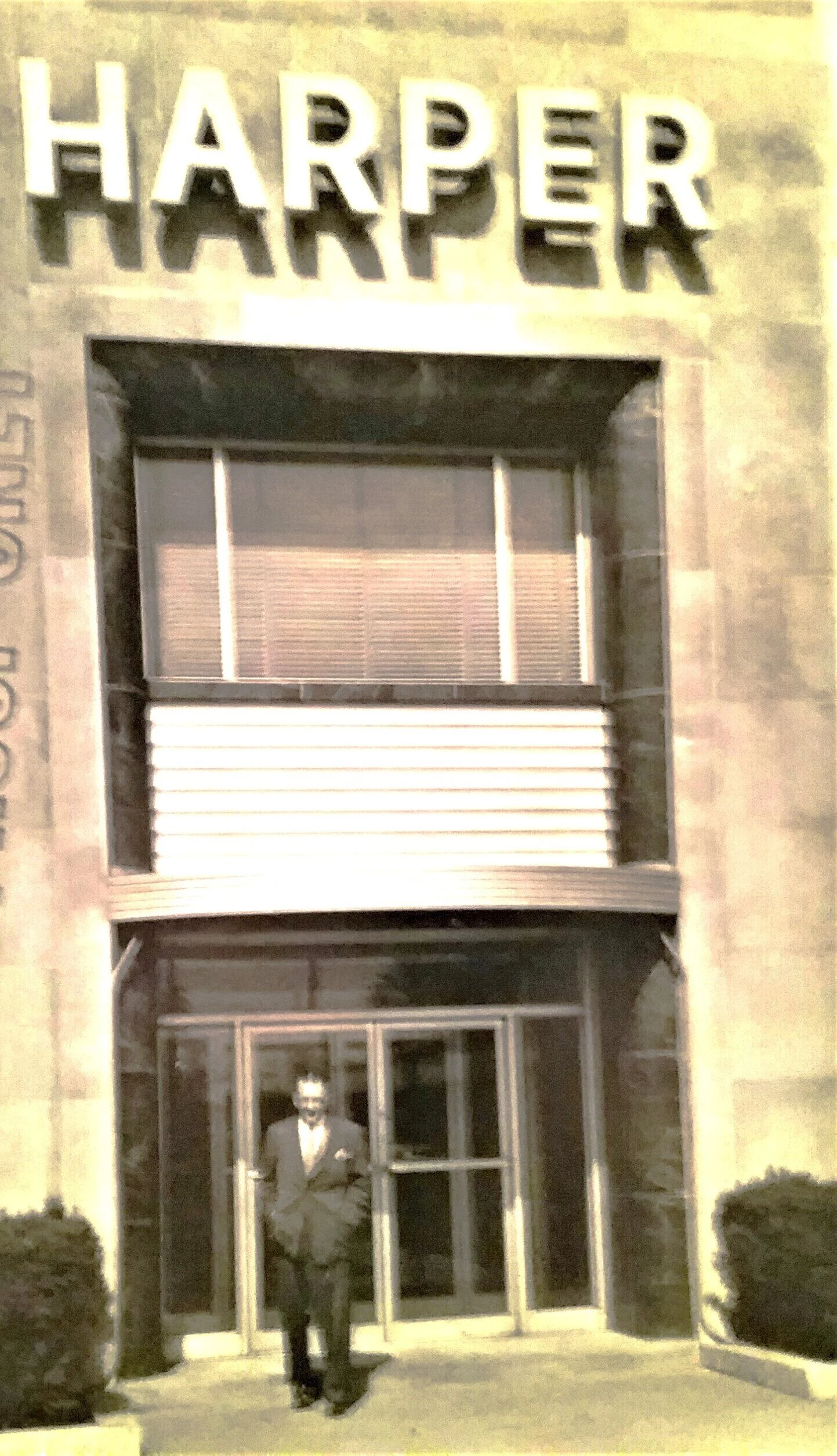
Mike in front of the headquarters
1964 was a sad year for the H.M. Harper Company because Mike died unexpectedly in August. His death was a shock to everyone who was involved with the company as well as Mike’s friends and family. It is worth noting that in the forty years since he built an incredible enterprise. In 1925 the company had sales of $ 7,679 without making a profit. By 1964, Sales had grown to $ 19,436,551 with a profit of $1,066,551. The company had numerous subsidiaries, an affiliate on France, seven sales offices in eight states and nineteen branch warehouses in the United States and Canada.
Kenneth B. Little, Mike’s wife’s brother took over as President and Chairman of the Board of Directors following Mike’s death. The other executives were. H. Mitchell Harper Jr.as Vice-President and Treasurer, Charles L. Harper as Secretary with Kenneth G. Hookanson and John A. Stevenson also Vice-Presidents. After an extensive search, Scott Harrod was bought in to be President. His executive-level experience with a large corporation was considered important for the company at that time. H.Mitchell Harper Jr., Charles L. Harper, John Mengel,John Stevenson, Donald and Donald Underwood were Vice-Presidents. Scott Harrod was President and Chairman of the Board from 1966 to 1972, Charles L. Harper then became the President until 1978.
In January, 1970 H.M. Harper Company acquired Aer-O-Line Manufacturing and Supply in Burbank, California. Aer-O-Line was set up as a subsidiary under the name of Harper Aer-O-Line Company. H.M. Harper Jr. became President. Aer-O-Line was a manufacturer of standard and specialized fasteners and components for the aerospace industry - which included both military and commercial aircraft.
I.T.&T. Acquires the Company
In an interview that appeared in an article in Business Week magazine in 1973, Charles L. Harper as the 43 year-old President, noted that management rejected at least one hundred merger suitors in the 1960s. On Sept. 17, 1970, The International Telephone and Telegraph Corporation announced it signed a letter of intent to acquire the H. M. Harper Company. ITT offered between $17 and $18 a share. Harper shares were then selling for $10 a share. ITT’s dividends were also appealing because they were sixty to seventy percent higher than the H.M. Harper Stock. The merger terms called for an exchange of 0.188 shares of International Telephone $4 convertible preferred Series K stock for each share of Harper common stock outstanding International Telephone issued about $17 million of its stock to acquire Harper. Charles L. Harper continued as President of IT.T. Harper until 1978. ITT then bought in its own President. Yet within a couple of years ITT closed the business. The closing was sad because the Company at one point in time employed close to 2,000 people.
The Company Financials - Mike’s legacy as an entrepreneur and industrialist
Started in 1923, the company generated sales $ 7,697 in 1925. But the company still was not profitable.
By 1951, Mike’s compensation as Chief Executive Officer was $65,125 or by today’s monetary value, $1,483,800. Mitch Harper’s 1951 compensation was $10,800 as Chief Engineer or $246,076 by today’s monetary value.
1956 Net sales: $11,125,755
1960 Net sales: $12,675,322
By 1964, when he died,, sales had grown to $ 19,436,551 with a profit of $ 1,166,208 .1937: Assets: $250,550. Current liabilities: $40,748, Dividend notes: $43,300, mortgage account $15,500, capital stock $72,060, capital surplus $13,900, earned surplus $$65,045. Net profit: $94,125.
In 1969: Assets: were $16,881,700. with current liabilities of $2,509,211, Long term debt: of $230,000., with stockholder’s equity: $6,703,854, and Reserves of $670,000, Retained earnings were : $6,826,658 on Net Sales of $ 26,414,200.
Photo Gallery
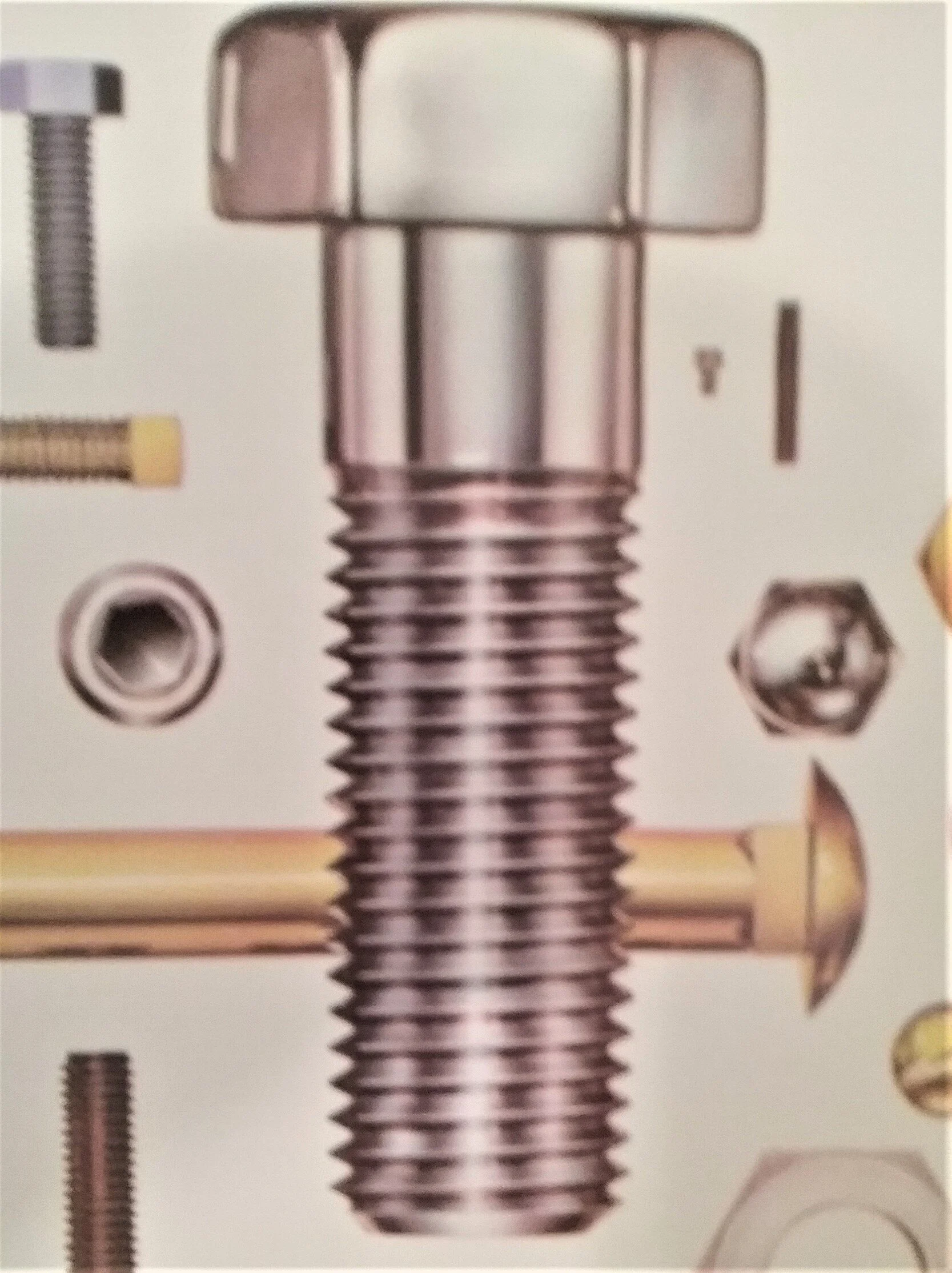
Everlasting Fasteners
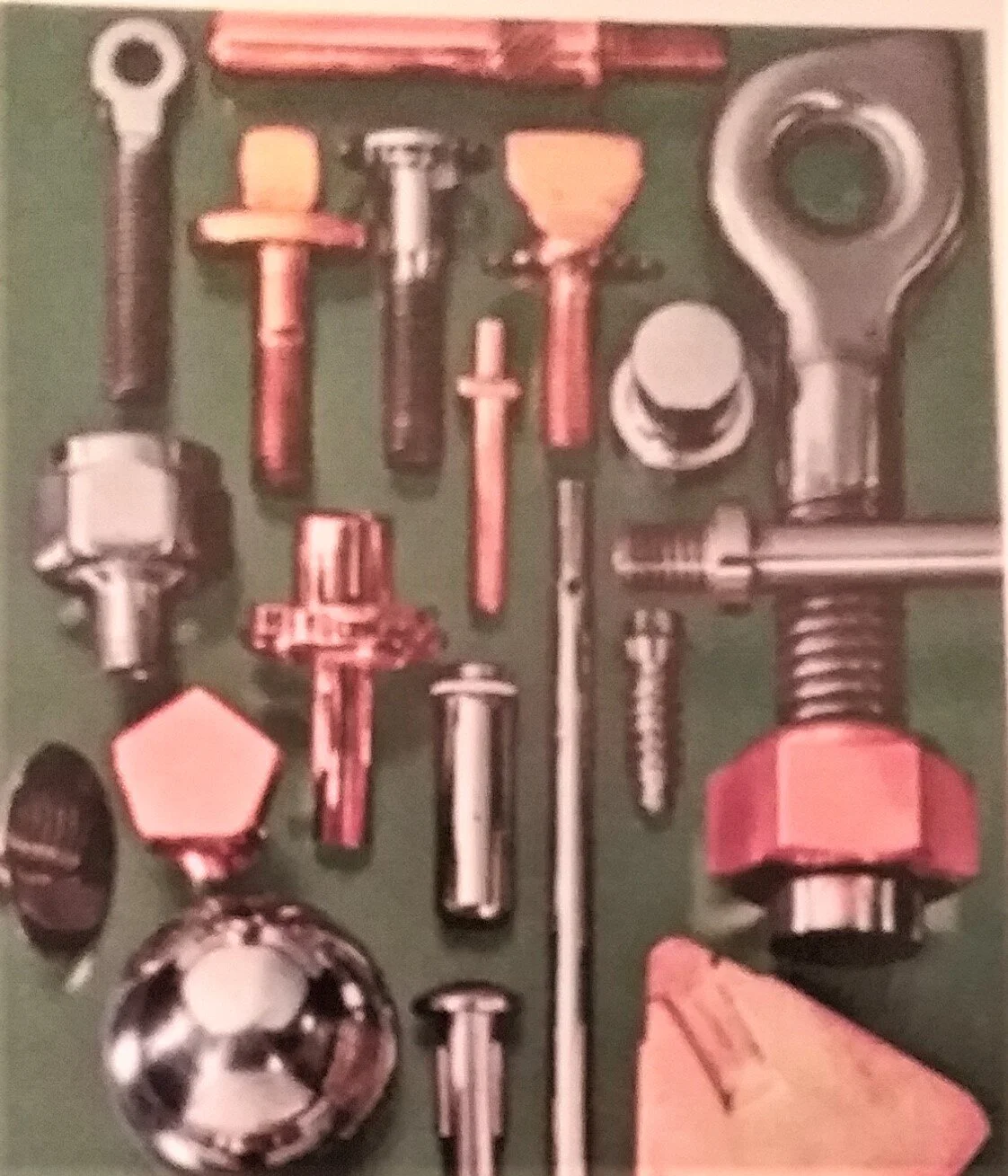
A variety of fasteners
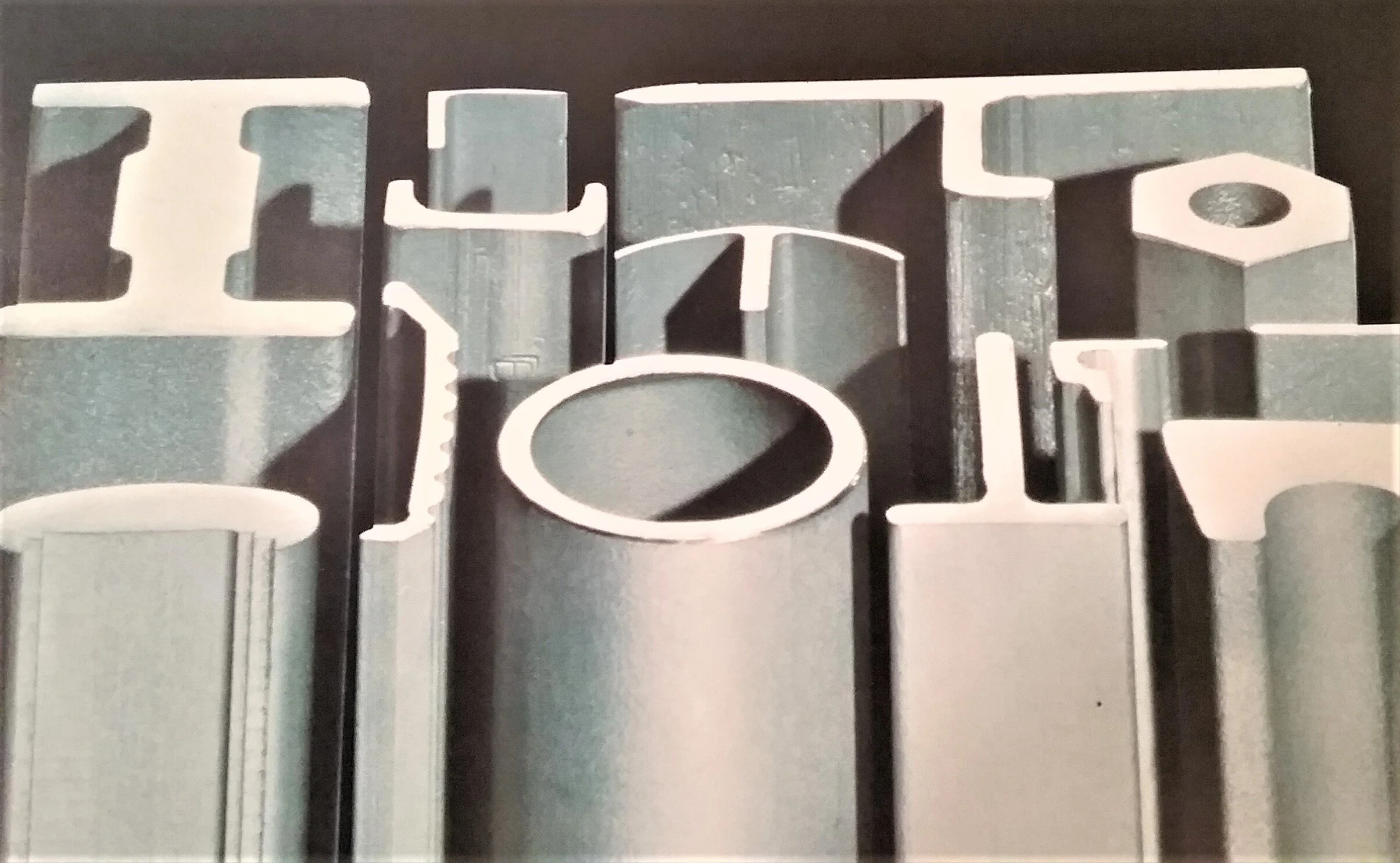
Extruded items
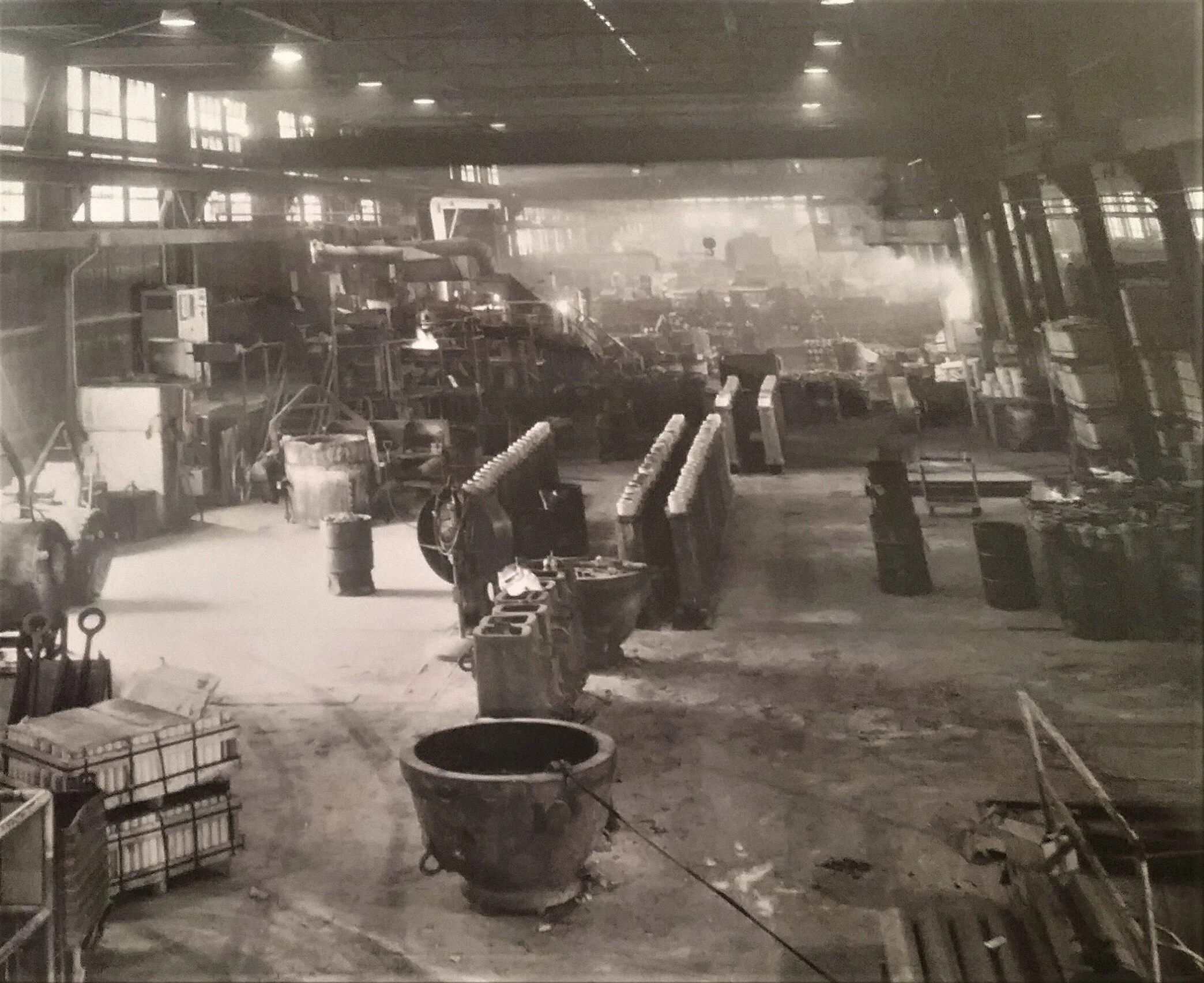
The "mill"
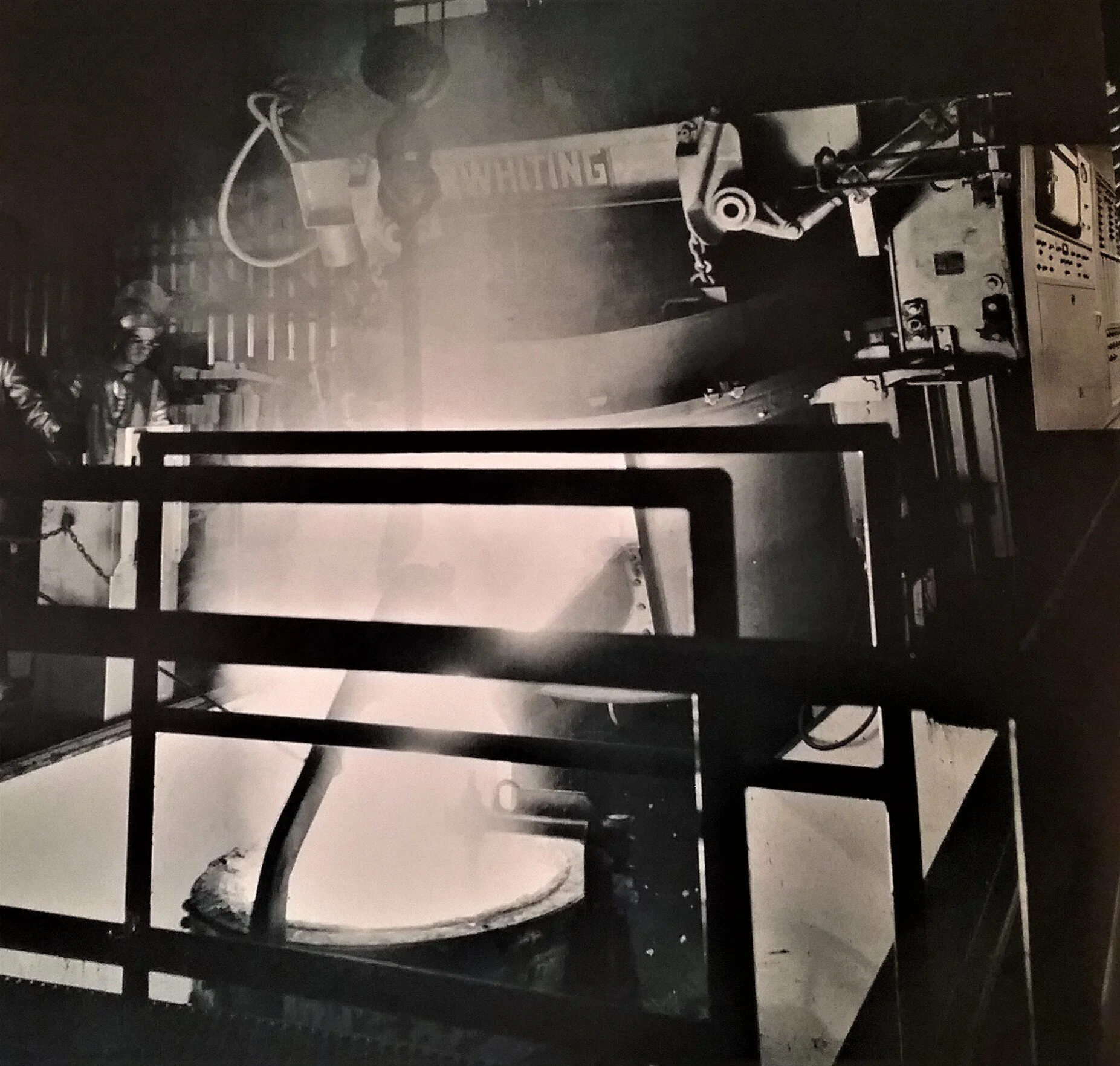
The furnace

Ingots being transformed
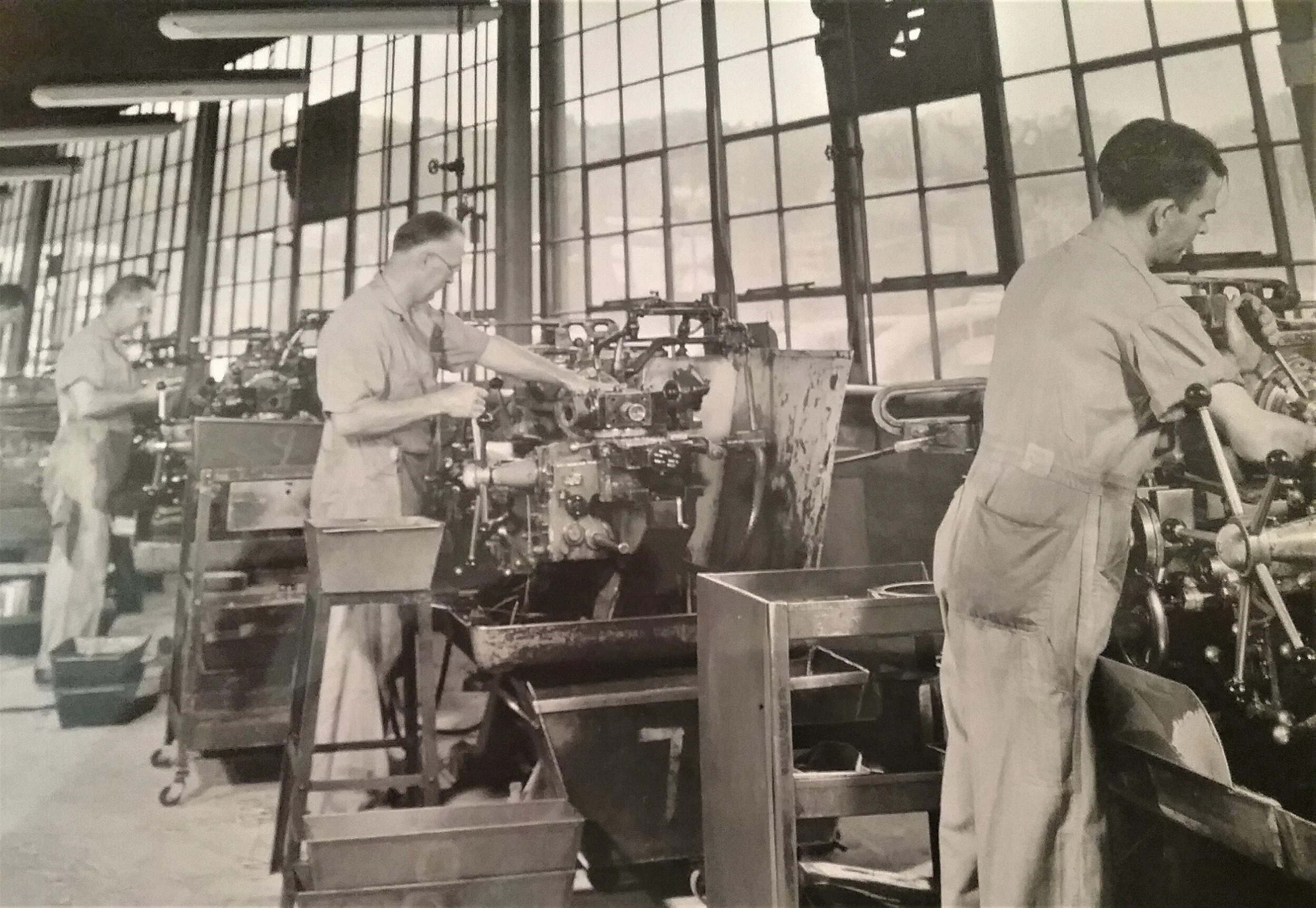
Fasteners being made
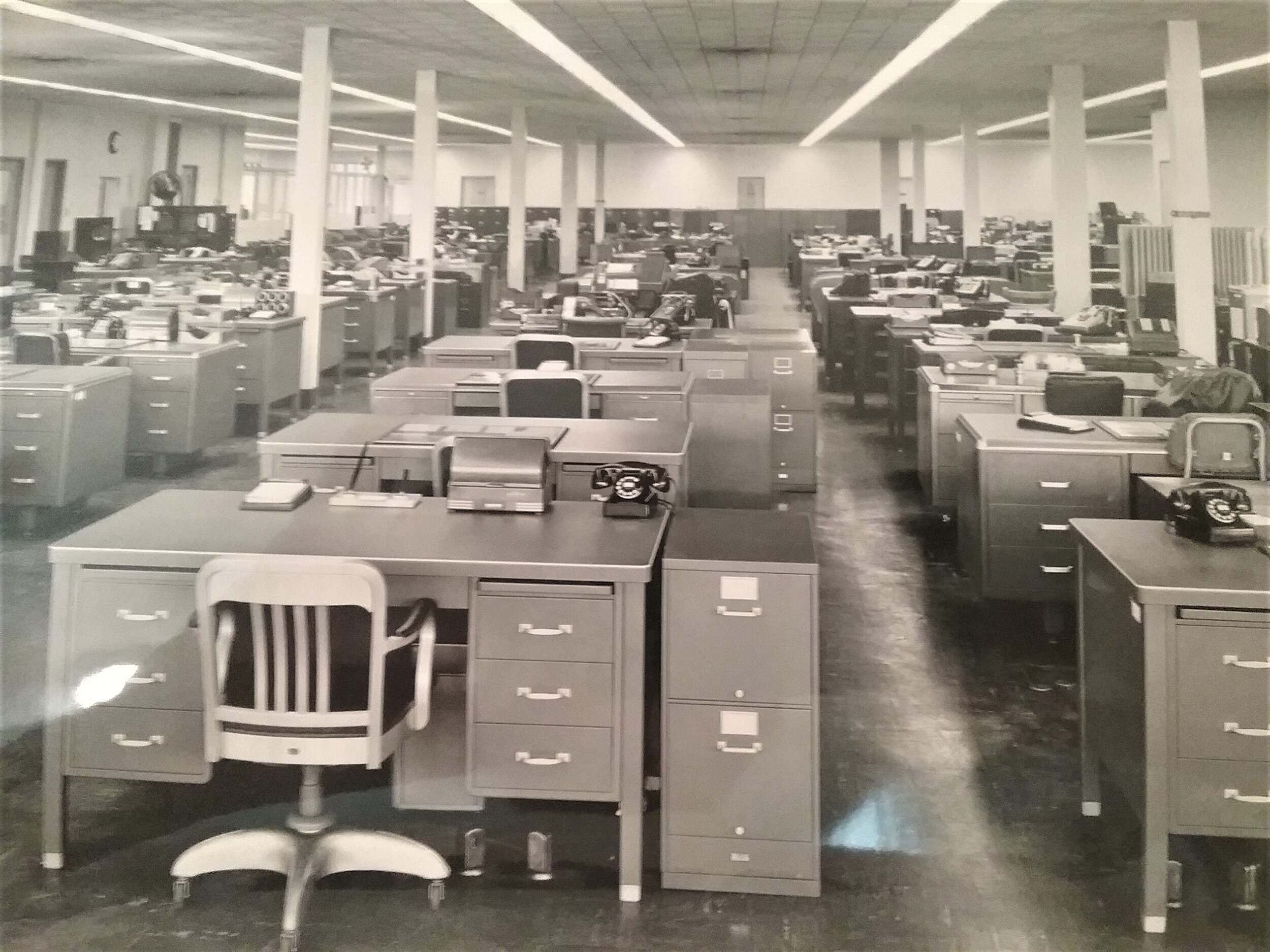
One of the areas in the main building
Personal Memories
Mike Harper
By Mike Harper, Mitch’s son: I worked at the Harper Company the summer after my freshman year in college in the Data Processing Dept. They were converting an old punch card system to a more up to date automated system.
By Mike Harper, Mitch’s son: After my sophomore year in college I worked at the Company again. This time in the Maintenance Dept. I wanted a job where I could experience the actual making of nuts and bolts. I worked in every part of the factory and the Mill. Keith Bagge, my old high school friend and later groomsman, worked with me which made the grungy jobs that were assigned more enjoyable. Our Supervisor knew I was a Harper and made the jobs particularly grungy. We tarred roofs, scraped wax off floors (wax used to lubricate the metal rods that went through machines to become bolts), cleaned the inside of dirty receptacles, etc. During one 4 week period when the plant was partially shut down, we worked 6 days a week and ten hour days. The days were hot in the factory and especially the Mlll where they had a furnace to melt steel to make rods for bolts and screws. The men that worked in the Mill were all “hillbillies” from the Blue Ridge Mountains. One of the men working on the furnace asked if I wanted to put on an heat retardant suit and “roll one”. This meant getting up on the rollers that slid iron rods into the many thousand degree furnace. I said I will take a pass on this one. One of the highlights in working in the mill was working in the “Bag House”. Our job along with one “hillbilly” was to take down around 200 bags that hung from the ceiling in the “Bag House” These bags caught all the grungy small particles from the Mill before it was released into the air. We wore masks to not breath the dust. Who knows what % of pollutants they stopped, But I assumed being a Harper, they were 100% ok? I was the person on the ladder and Keith was the person at the bottom unhooking the bag. I would say to him “ here comes the bag” as it dropped on his head. What made it particularly funny was his name was Bagge.
Steve Harper
By Steve Harper, Mitch’s son: One of the major events at the Company’s annual picnic was a donkey softball game between the managers and the workers. H.M. (Mitch) Harper Jr. told his son Steve at one of the picnics that the softball game gave the managers a chance to “make asses of themselves.”
By Steve Harper, Mitch’s son: When I was about twelve, I asked my father if I could compete in any of the games and races. He said I could but I cannot win because it is “the people’s day.” My father was not being a snob. He just reminded me that the picnic was intended to bring management and the employees together, not separate them.
By Steve Harper, Mitch’s son: I had lunch with uncle Charlie when he was President of the Company. When we were talking about the impact of the company being a subsidiary of ITT I mentioned that I was surprised ITT had not brought in its own person to be the President - which was very customary with ITT. He told me that ITT had not figured out how to run the company because it was not like the hotels, insurance companies and other conventional businesses it had acquired. He then noted, “When ITT does, it will send in one of own person to be President and a bunch of Wharton MBAs to run the company.” I suspect that soon after uncle Charlie left the company in 1978 he shook his head at the arrogance demonstrated by ITT. It did not take long for ITTs team at Harper to demonstrate it did not know how to manage such an enterprise.
By Steve Harper, Mitch’s son: After the Company was shut down. I had a chance to walk through the mill, production areas and offices before everything was demolished. When I asked the security guard if I could take a look, she initially turned me down. When I told her about the three generations of Harpers that worked there, she became more interested in what she was guarding. Apparently no one had taken the time to let her know about the company. She then noted she had to do her scheduled walk through of the buildings in a few minutes. She invited me to join her as long as I would give her a “guided tour.” I found the plant and the other buildings had been stripped of all the machines and even the desks. In a sense, the company had become a ghost town. When I walked through the executive offices I did find a few trophies and company photos, but that was all that was left except one very important thing … possibly the most important thing left of the company other than our memories. The Harper “infinity symbol” was still fixed above the entrance of the main building. Fortunately soon after my site visit my brother David was able to remove the five foot wide elongated stainless steel infinity symbol and save it for posterity.
By Steve Harper, Mitch’s son: I worked part-time in the warehouse and distribution part of the company one summer while in high school. It gave me a chance to meet and work with a lot of the employees in a non-air conditioned part of the plant. The people there were very nice to each other and cared about what they were doing. Many of the employees were multi-generational employees with fathers, mother, sisters and brothers working there.. One of the things they enjoyed most was the opportunity to listen to the Cubs games while they worked. Another thing that was unusual was the employees could choose whether they wanted a paycheck or cash. I think many chose the paycheck so they would be more likely to save their earnings.
By Steve Harper, Mitch’s son: One Saturday when I was about nine years old my father took me through the mill. The sights and sounds were captivating. I was particularly interested in the chromium nuggets in the fifty gallon drums. They were heavy and looked like chunky silver rocks. When I went to put one in my pocket my father told me to put it back because it belonged to the company and the people who owned it. That may have been my first lesson business ethics.